
An unexplained fall in a California assisted living facility can leave a family with more questions than answers. A resident may be found on the floor beside a bed, in a bathroom, near a doorway, or in a hallway with no staff member able to explain exactly what happened. Sometimes the resident remembers the event. In other cases, dementia, confusion, pain, or a head injury may make the resident’s account incomplete.
A fall by itself does not prove neglect. Older adults may fall even when appropriate precautions are in place, and some residents have medical conditions that make balance and mobility unpredictable. The more useful question is whether the facility understood the resident’s fall risk, provided the assistance and supervision the resident actually needed, responded appropriately after the event, and changed the care approach when the circumstances showed that something was no longer working.
This article focuses specifically on falls in California assisted living facilities, many of which are licensed as Residential Care Facilities for the Elderly (RCFEs). That is different from a skilled nursing setting, where the resident may be receiving continuous nursing care or rehabilitation. In assisted living, many residents remain partly independent but rely on caregivers for supervision, mobility assistance, toileting, medication support, and recognition of changes in condition.
“Unexplained” and “Unwitnessed” Do Not Mean the Same Thing
An unwitnessed fall simply means no one saw the resident go down. A resident may have been walking independently, getting out of bed, or using the bathroom when the fall occurred.
For purposes of evaluating what happened, “unexplained” is a practical description rather than a separate legal category. It means important facts remain unclear—for example, staff cannot provide a consistent account of where the resident was found, when the resident was last seen, whether assistance had been requested, what mobility aid was available, or what happened immediately afterward.
A family may reasonably want to know:
- Where was the resident found?
- When was the resident last seen before the fall?
- Was the resident supposed to walk independently or with assistance?
- Was a walker, cane, wheelchair, or other mobility aid within reach?
- Was the resident trying to reach the bathroom?
- Had the resident recently become weaker, more confused, or less steady?
- Had there been a recent medication change?
- Were there environmental hazards in the area?
- Did the resident complain of pain, dizziness, or other symptoms afterward?
The answers may show that the fall was an isolated accident. They may also reveal a larger problem involving supervision, staffing, medication, changing mobility, or a care approach that no longer matched the resident’s needs.
California Assisted Living Facilities Must Know the Resident’s Functional Needs
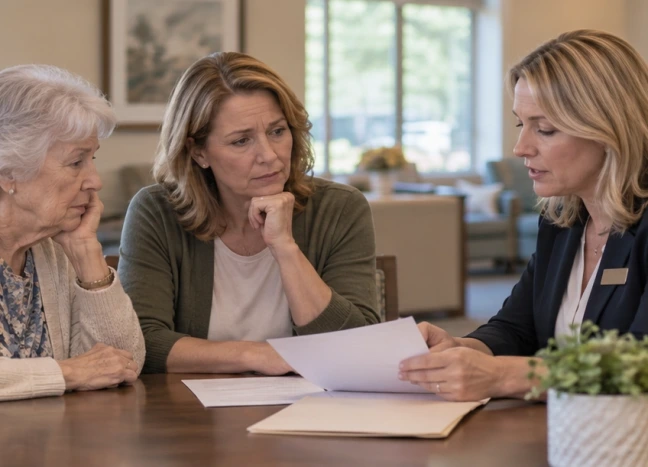
California requires assisted living facilities to evaluate a prospective resident before admission. The pre-admission appraisal includes discussion of specific service needs, medical background, and functional limitations. The facility must also obtain a medical assessment made within the prior year and signed by a licensed medical professional. That assessment includes physical limitations and whether the resident is ambulatory, nonambulatory, or bedridden.
That information matters after a fall because it helps establish the resident’s expected baseline. A person who walks independently presents different risks from someone who needs standby assistance, help transferring, or hands-on support every time the person gets up.
The facility’s obligations do not stop at admission. California regulations require residents to be regularly observed for changes in physical, mental, emotional, and social functioning. When observation reveals unmet needs, appropriate assistance must be provided; certain changes in mental ability or physical health must also be documented and brought to the attention of the resident’s physician and responsible person, if any.
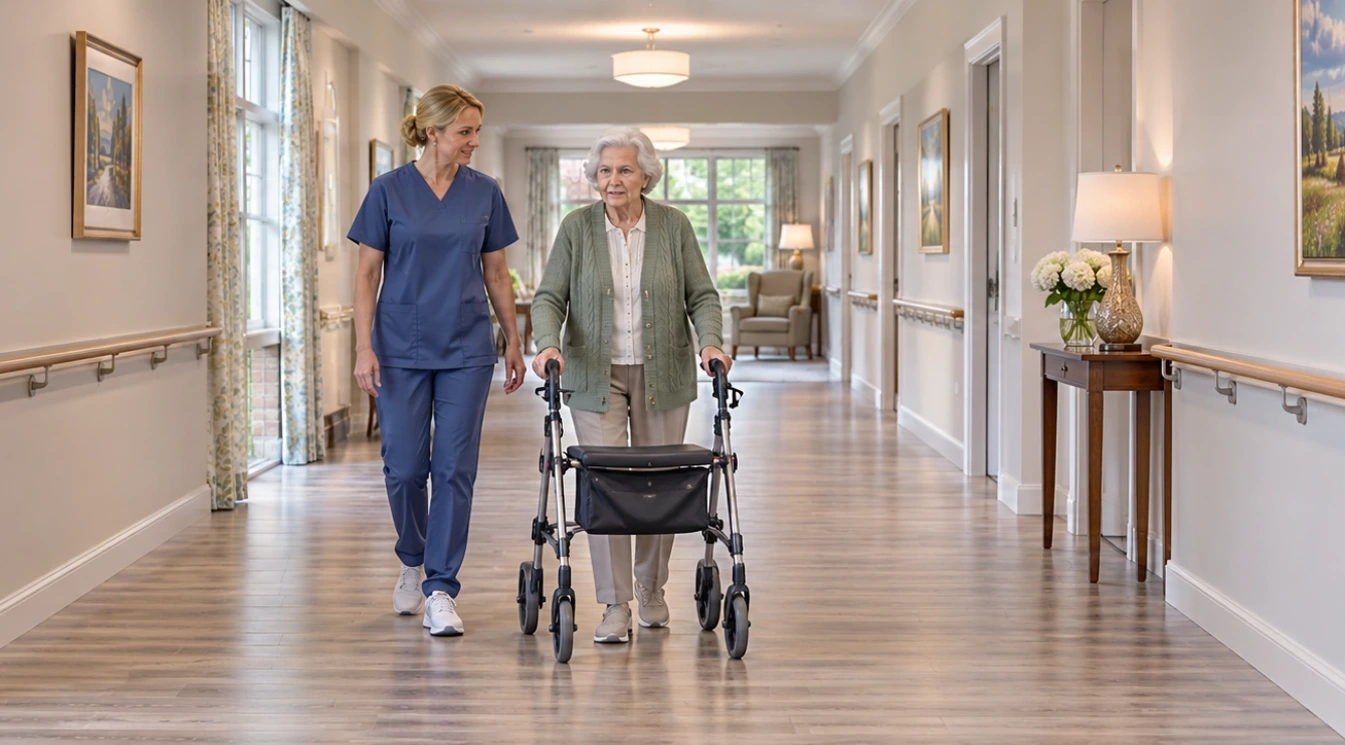
A Fall Can Be a Signal That the Resident’s Needs Have Changed
One fall does not necessarily mean the resident’s care level must change. But a fall can reveal new weakness, poorer balance, cognitive decline, vision problems, medication effects, or a loss of judgment about when to ask for help.
California’s reappraisal rules require the resident’s appraisal to be updated in writing as frequently as necessary or once every 12 months, whichever comes first, so that significant changes are documented and the appraisal remains accurate. An illness or injury that results in a significant change in health-care or dietary needs is specifically included in the current regulation. The facility must also make corresponding changes in the care and supervision provided to the resident.
That makes the period after a fall important. If a resident who previously walked independently suddenly becomes unsteady, a reasonable response may involve more than documenting the incident and returning to the same routine. Depending on the circumstances, staff may need to obtain medical input, update the resident’s appraisal, change supervision, reconsider mobility assistance, or evaluate whether the resident’s current placement remains appropriate.
Our article on when a California assisted living facility can no longer meet a resident’s care needs explains how changing physical and cognitive needs can affect assisted living placement and services.
Repeated Falls Deserve a Different Level of Attention
A single fall and a pattern of falls are not the same thing. When a resident falls repeatedly, the facility has more information about the resident’s risk and more opportunities to identify patterns.
Repeated falls may occur:
- At the same time of night when the resident tries to use the bathroom
- After receiving a sedating or blood-pressure-lowering medication
- When the resident gets up before staff respond to a call for assistance
- During transfers between a bed, chair, toilet, or wheelchair
- When the resident forgets to use a walker
- After returning from the hospital weaker than before
- During periods of increased confusion or agitation
- In the same part of the room or hallway
A pattern can be useful because it points toward specific questions. If several falls occur during nighttime toileting, the issue may involve the resident’s schedule, staffing, call response, lighting, or need for more assistance. If the pattern begins after a medication change, the medication may need professional review. If the resident repeatedly forgets a walker because of dementia, reminders alone may no longer be enough.
Medication Changes Can Affect Balance and Alertness
Medication is one potential contributor to falls, but it should not be assumed to be the cause every time a resident becomes unsteady. Older adults may take medications that affect blood pressure, alertness, coordination, sleep, or urinary frequency, and a new drug or dosage change can sometimes coincide with a noticeable change in mobility.
Families may want to pay attention when a fall occurs soon after a medication was started, stopped, increased, or reduced, especially if the resident also appears unusually sleepy, dizzy, confused, or weak.
Medication decisions belong to qualified health professionals. The facility’s role is to follow current medication orders, provide permitted assistance, observe meaningful changes, and communicate concerns rather than making independent medical judgments. Our article on medication errors in California assisted living facilities addresses those issues in more detail.
Dementia Can Change the Meaning of “Independent” Mobility
A resident with dementia may still be physically capable of walking but no longer recognize hazards or remember when assistance is needed. The resident may stand suddenly, walk without a mobility aid, enter an unfamiliar area, or try to reach the bathroom without waiting for help.
That creates a different supervision problem from simple muscle weakness. The resident’s legs may still work, but judgment and hazard awareness may have changed.
California’s current reappraisal rules identify unsafe wandering and lack of hazard awareness as examples of behavioral expressions that may create a risk of harm. For a resident with cognitive decline, repeated falls can be one sign that the level of supervision or the care approach needs to be reconsidered.
Our guide to memory care neglect in California assisted living discusses dementia supervision, behavioral changes, personal care, and reassessment in greater detail.
The Physical Environment Can Contribute to a Fall
Not every fall is caused by the resident’s medical condition. The environment matters too. California requires assisted living facilities to remain clean, safe, sanitary, and in good repair.
Potential fall hazards can include:
- Poor lighting, especially between the bed and bathroom
- Loose rugs, cords, or clutter in walking paths
- Wet or slippery floors
- Furniture placed where it narrows a walkway
- A call device the resident relies on being out of reach or not functioning properly
- A walker or cane left out of reach
- Poorly fitting footwear
- Missing or poorly placed grab bars where needed
California’s Department of Social Services continues to emphasize fall awareness and prevention in residential care. Its 2025 emergency-care guidance recommends individualized fall-prevention planning with input from licensed medical professionals and consideration of factors such as vision, medication effects, cognition, hearing, lighting, trip hazards, grab bars, footwear, glasses, and hearing aids. In 2026, the Department also held a provider informational call focused on fall prevention, post-fall response, personal rights, and continuous quality improvement.
The goal is not to create a perfectly risk-free environment. That is rarely possible. The goal is to identify hazards and resident-specific risks that can reasonably be reduced.
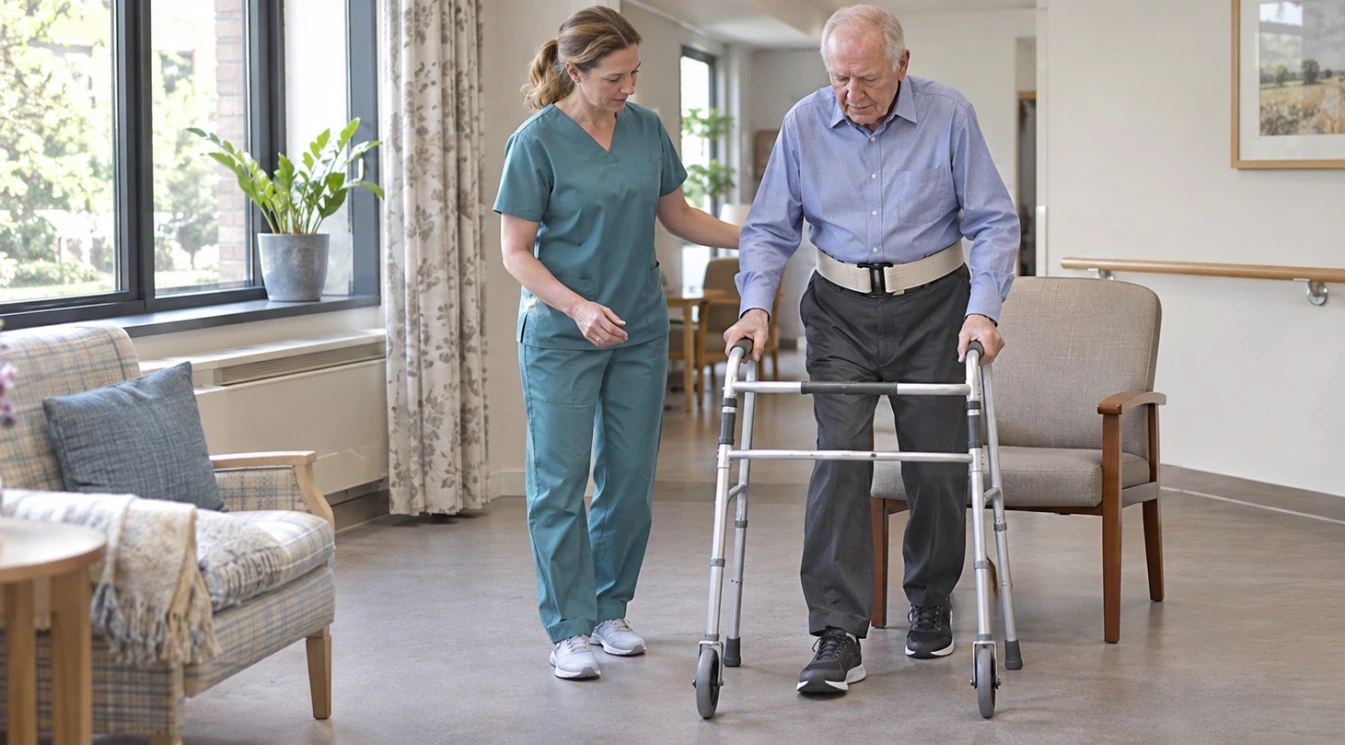
Staffing Can Matter Even When the Resident Is Not on Constant Supervision
Assisted living does not mean that every resident has one-on-one supervision. Many residents are expected to move around independently. But California regulations still require personnel to be sufficient in number and competent to provide the services residents need.
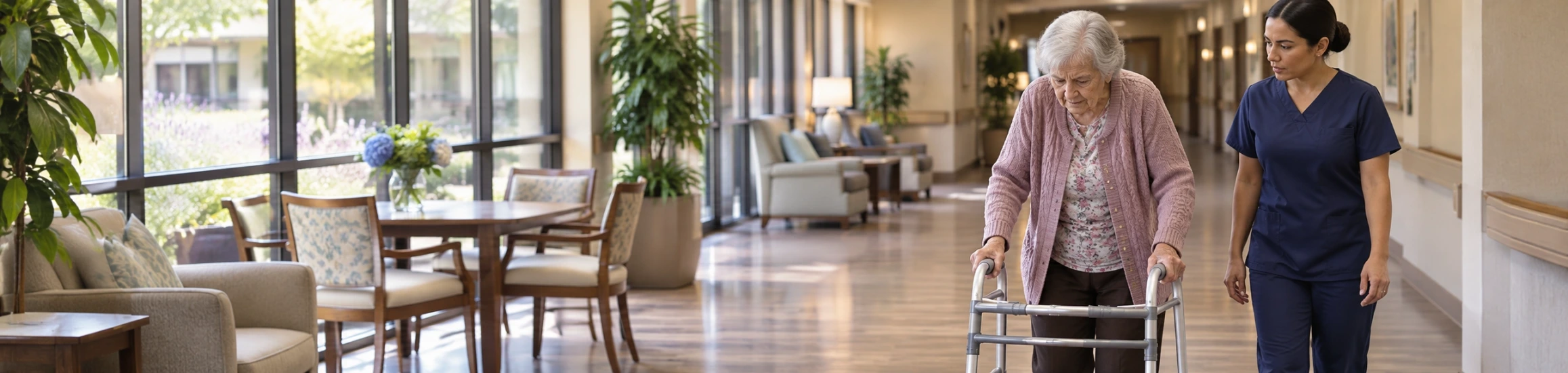
Staffing becomes relevant when the resident’s appraisal calls for help that is not consistently available. Examples might include assistance with nighttime toileting, standby help during transfers, escorting the resident to meals, or responding when the resident uses a call system.
If the resident repeatedly attempts to get up alone because help takes too long to arrive, the issue is different from a completely unpredictable fall by an otherwise independent resident.
What Should Happen After an Assisted Living Fall?
The appropriate response depends on the resident’s condition. A minor event with no apparent injury is different from a fall involving head impact, severe pain, loss of consciousness, or inability to move normally.
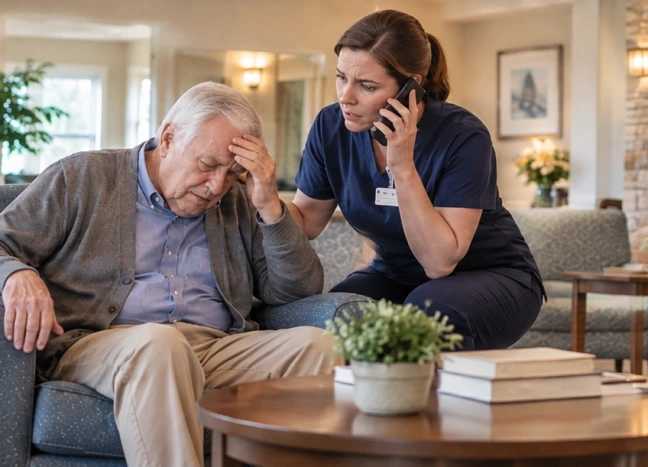
California’s regulation requires an RCFE to immediately call 911 when an injury or other circumstance has resulted in an imminent threat to a resident’s health, including an apparent life-threatening medical crisis, unless a specific regulatory exception applies. Separate 2025 Department guidance lists falls with suspected head injury, obvious broken bones, or complaints of pain or loss of range of motion among situations for which an immediate 911 call is recommended as a best practice.
The same guidance warns that even falls that initially seem minor can result in fractures, head trauma, or internal injuries that are not immediately obvious. For non-imminent situations, other forms of medical evaluation may be appropriate. Staff should not assume that a fall is harmless simply because the resident is awake or there is no visible wound.
Our article on assisted living emergency response and 911 calls explains California’s emergency-care rule and the distinction between a medical emergency and a routine lift assist.
Does a Serious Assisted Living Fall Have to Be Reported?
Not every fall automatically triggers the same reporting requirement. Under California’s RCFE reporting regulation, however, a serious injury—as determined by the attending physician—that occurs while the resident is under facility supervision must be reported in writing to the licensing agency and to the person responsible for the resident within seven days. The written report includes basic information about the event, the attending physician’s findings and treatment, if any, and the disposition of the case.
This reporting rule is separate from the facility’s immediate responsibility to obtain appropriate medical help. A family trying to understand a serious fall may therefore want to ask not only what happened clinically, but also what the facility documented and whether the event met California’s licensing-report requirements.
When Accounts of the Fall Do Not Match
Families understandably become concerned when different staff members give different explanations. One caregiver may say the resident slipped in the bathroom; another may say the resident was found next to the bed; an incident report may contain different timing altogether.
Conflicting accounts do not automatically prove wrongdoing. Staff may remember events differently, information may be passed inaccurately between shifts, or the resident may have moved after the fall. But significant inconsistencies make contemporaneous records especially important.
A useful review compares the timeline rather than relying on one person’s memory:
- When the resident was last seen before the fall
- When the resident was found
- Who responded first
- What the resident said at the time
- What injuries or symptoms were observed
- When family or a medical professional was notified
- Whether emergency services were called
- Whether the resident’s appraisal, service plan, or supervision changed afterward
Records That May Help Explain an Unexplained Fall
When a fall results in a serious injury or remains poorly explained, relevant records may include:
- The pre-admission appraisal and later reappraisals
- The resident’s medical assessment and ambulatory status
- Individual service plans or mobility instructions
- Caregiver and shift notes
- Facility incident or unusual-incident reports, if available
- Medication lists and recent medication changes
- Hospital, ambulance, imaging, and emergency department records
- Fall-risk or mobility assessments prepared by outside professionals
- Staff schedules and assignments
- Call-system or alert records if available
- Photographs of the room, bathroom, or area where the fall occurred
- Communications with the family before and after the event
Preserving the earliest version of the facility’s explanation can also be useful when later accounts differ. Families can keep contemporaneous notes, photographs, messages, discharge paperwork, and other records they lawfully receive so that the timeline does not depend entirely on memory weeks or months later.
When an Unexplained Fall May Point to Assisted Living Neglect
An unexplained fall does not automatically support a legal claim. A meaningful review looks at what the facility knew before the fall, what assistance the resident was supposed to receive, whether the environment was reasonably safe, how staff responded, and what changed afterward.
Concerns become more significant when the facility knew the resident needed assistance but did not provide it, repeated falls occurred without meaningful reassessment, obvious hazards were left uncorrected, medication-related changes were ignored, or a serious injury was followed by a delayed medical response.
Newman Law Group represents residents and families in Sacramento and throughout Northern California in matters involving assisted living abuse and neglect, unexplained falls, fractures, inadequate supervision, medication-related harm, and failures to respond to changing care needs.
Contact Newman Law Group to discuss a serious assisted living fall or neglect concern, or call 9169320397.
This article provides general legal and care information and is not advice for a particular resident, fall, or facility. Falls can have many causes, and medical evaluation may be necessary after a fall involving pain, head impact, loss of consciousness, reduced mobility, or other concerning symptoms.