
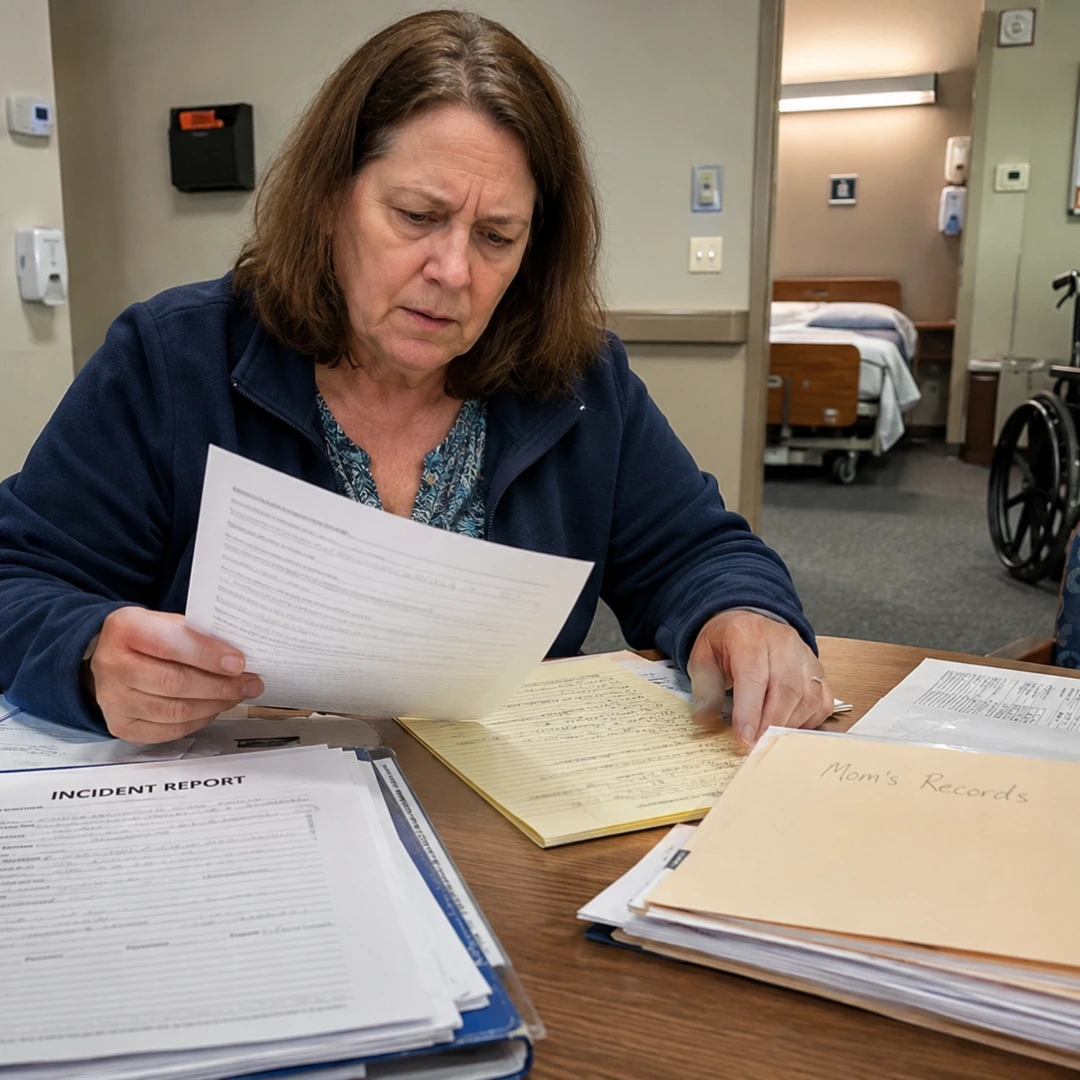
When a family suspects nursing home abuse or neglect, the first priority is protecting the resident and obtaining appropriate medical care. The next challenge is understanding what happened. Conditions can change quickly, staff members may remember events differently, electronic records may be updated, and surveillance footage may be overwritten. Information that seems unimportant today can become significant when the complete timeline is reviewed later.
Preserving evidence does not mean conducting a private investigation or confronting facility employees. It means creating an accurate record, keeping original materials intact, and requesting relevant information through lawful channels. Careful documentation can help physicians, regulators, family members, and attorneys evaluate whether an injury resulted from an unavoidable medical event, an isolated mistake, or a broader pattern of nursing home neglect.
Protect the Resident Before Focusing on Documentation
Evidence is important, but it should never delay urgent care. A resident with a suspected fracture, head injury, severe infection, breathing difficulty, sudden confusion, uncontrolled pain, or another serious change may need immediate medical evaluation. Families should call emergency services when the circumstances require it and should not move an injured resident merely to obtain photographs.
When the immediate danger has passed, note who was notified, when medical assistance was requested, where the resident was taken, and what the treating professionals observed. Hospital and emergency records often provide an independent description of the resident’s condition soon after the event.
Begin With a Clear, Contemporaneous Timeline
A dated timeline is often one of the most useful records a family can create. Write down events while they are fresh rather than relying on memory weeks or months later. Include facts, direct observations, and the source of information. Distinguish between what you personally saw, what the resident said, and what a staff member reported.
- Record the date, approximate time, location, and people present.
- Describe the resident’s condition before and after the event.
- Note changes in mobility, alertness, appetite, hygiene, mood, pain, or communication.
- Write down questions asked of staff and the answers provided.
- Identify inconsistent explanations without trying to resolve them in the moment.
- Save appointment dates, hospital transfers, care-plan meetings, and complaint numbers.
A useful timeline is factual and restrained. Avoid speculation, diagnoses, or conclusions that have not been confirmed. Short entries made consistently are generally more valuable than a long account written much later.
Photograph Visible Injuries and Relevant Conditions Carefully
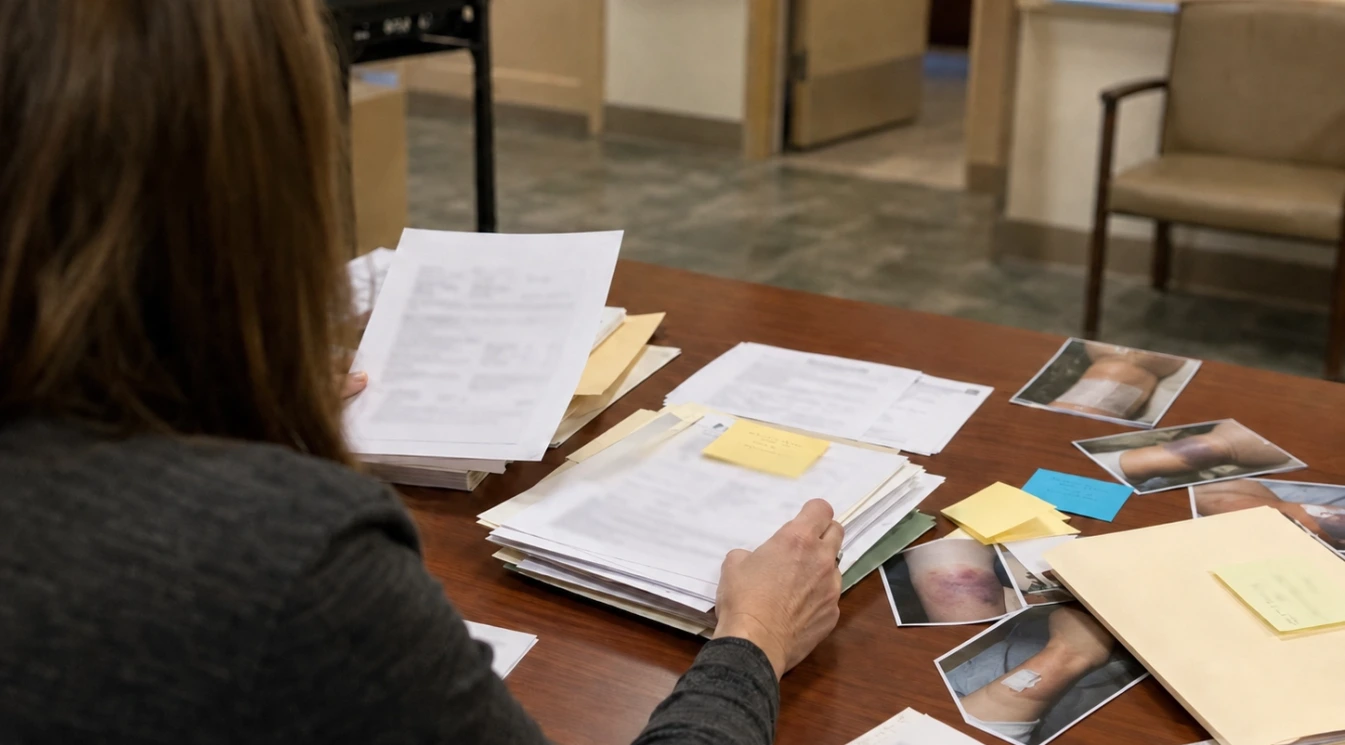
Photographs may help document bruising, swelling, skin breakdown, poor hygiene, damaged equipment, an unsafe room arrangement, or another visible condition. When appropriate and permitted by the resident, take clear photographs from more than one distance. A wider image can show location and context, while a closer image can show detail.
Preserve the original files. Do not rely only on cropped, filtered, annotated, or texted copies. Original digital files may contain date and device information that screenshots or social-media uploads do not preserve. Back up the files without changing them, and keep a simple note identifying when and where each photograph was taken.
Respect the resident’s privacy and dignity. Avoid exposing more of the person’s body than is necessary, and do not interfere with wound care or other treatment. Photographs should document a condition, not create additional distress.
Preserve Messages, Emails, Voicemails, and Facility Communications
Communications can establish when the facility learned about a problem and how it responded. Save text messages, emails, portal messages, voicemail recordings, letters, care-plan invitations, discharge notices, billing communications, and written complaints. Keep the complete conversation rather than preserving only one message that appears favorable.
For digital communications, retain the original message whenever possible. A screenshot may be useful for quick reference, but it may omit the sender address, attachment information, or surrounding conversation. Export or save messages in a format that preserves the full content and basic metadata, and keep copies of any attachments.
Do not alter messages or recreate missing language from memory. If a conversation occurred by telephone or in person, make a dated note afterward that identifies the participants and summarizes what was discussed. California law restricts recording confidential communications without consent in many circumstances, so families should obtain legal advice before making secret audio recordings.
Request the Resident’s Medical and Care Records
The clinical chart may show what risks were identified, what care was ordered, what staff documented, and whether the resident’s condition changed over time. Federal nursing home regulations generally require a facility to provide a resident access to personal and medical records within 24 hours of an oral or written request, excluding weekends and holidays. Copies generally must be available upon request with two working days’ advance notice. A representative’s access depends on the resident’s authorization and the representative’s legal authority.
Request records in writing and keep a copy of the request. Be specific about the date range and types of records requested. A broad request for “the entire chart” can be useful, but a detailed list may reduce misunderstandings.
- Clinical and care-planning records
- Admission, baseline, quarterly, annual, and significant-change assessments.
- Care plans and care-plan revisions.
- Nursing notes and certified nursing assistant documentation.
- Physician orders, progress notes, and consultation reports.
- Medication and treatment administration records.
- Wound assessments, measurements, photographs, and treatment records.
- Nutrition, hydration, weight, therapy, mobility, and toileting records.
- Hospital transfer, emergency treatment, and discharge records.
- Incident-related and operational information
- Post-fall or post-incident assessments.
- Notifications to physicians and resident representatives.
- Staff assignment sheets, schedules, and relevant training records.
- Call-light, door-alarm, electronic chart, or access-control logs.
- Equipment inspection, maintenance, or repair records.
- Facility policies applicable to the type of event.
Not every operational or internal document must be given directly to a family upon request. Incident reports, internal investigations, staffing material, video, audit trails, and similar information may require a more formal process. Families should still identify those materials early because they may be relevant and may not be retained indefinitely.
Keep Records From Outside Medical Providers
Hospital, emergency department, ambulance, specialist, laboratory, pharmacy, rehabilitation, and primary-care records may provide an important comparison with the nursing home chart. Outside clinicians may describe wounds, fractures, dehydration, infection, medication effects, weight loss, or changes in mental status that were not clearly reflected in facility documentation.
Preserve discharge instructions, imaging reports, photographs taken by medical providers, medication lists, bills, and written communications. Do not assume that the nursing home’s chart automatically includes every outside record.
Preserve Financial and Personal-Property Evidence When Relevant
Suspected abuse is not always physical. Missing money, unexplained withdrawals, altered beneficiary designations, unusual purchases, forged signatures, missing jewelry, or changes in account access may indicate financial exploitation or misappropriation of property.
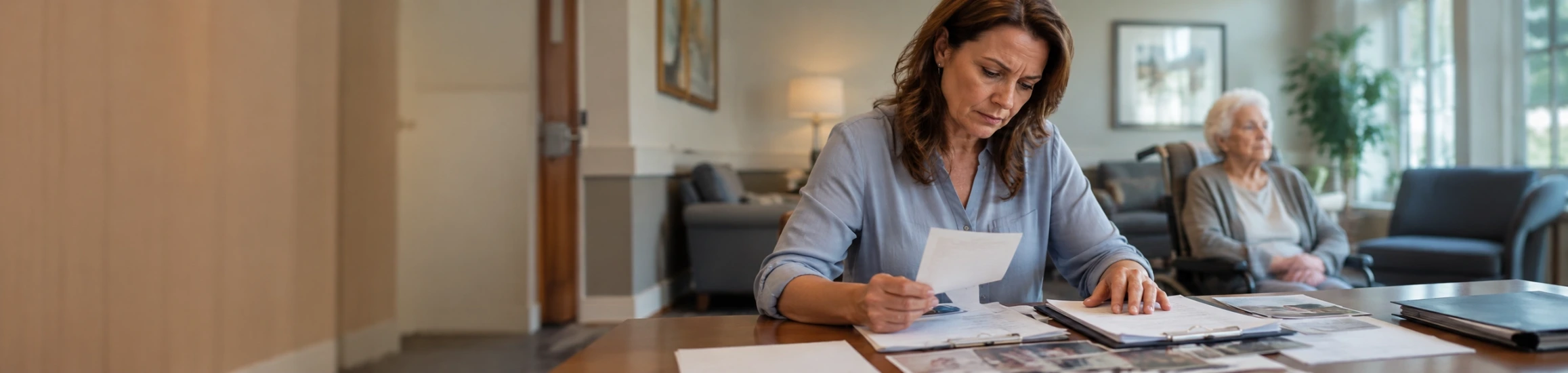
Useful records may include bank statements, canceled checks, credit-card statements, receipts, powers of attorney, facility trust-account statements, property inventories, emails, text messages, and documents showing who had access. Keep original papers in a secure place and work from copies. Do not write notes on original financial or legal documents.
Identify Potential Witnesses Without Influencing Them
Residents, visitors, roommates, former employees, aides, nurses, therapists, physicians, transport personnel, and family members may have relevant information. Record names, roles, contact information, and what each person appeared to observe. Do not pressure witnesses to agree with a theory, rehearse a story, or sign a statement they do not understand.
A neutral note such as “Roommate was present when staff entered” is more reliable than a conclusion about what the roommate must have seen. Witness interviews are often better handled by an attorney or investigator who can ask appropriate questions and preserve the information accurately.
Why Electronic Evidence May Need Prompt Attention
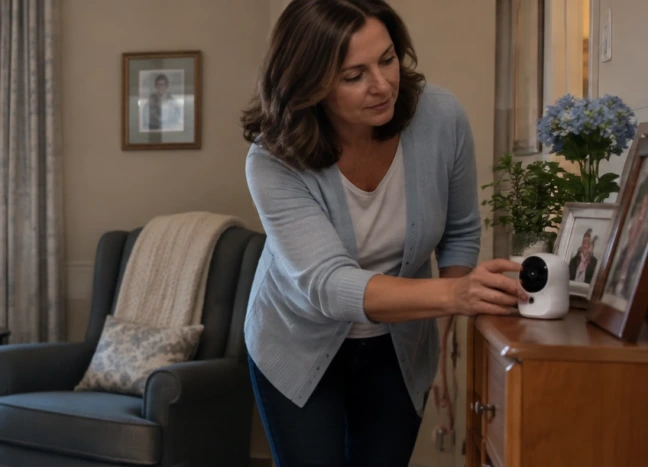
Modern nursing homes may use electronic medical records, electronic medication systems, call-light tracking, key-card access, hallway cameras, door alarms, staffing software, and internal messaging platforms. Some systems preserve detailed audit trails showing when an entry was created, viewed, or changed. Others automatically overwrite data after a limited period.
A lawyer may send a preservation notice requesting that potentially relevant information not be deleted or overwritten. Depending on the event, that request may address surveillance video, electronic chart audit trails, call-light response data, staffing and assignment records, internal communications, photographs, door-alarm logs, and equipment records. Acting promptly does not prove wrongdoing; it simply reduces the risk that routine deletion policies will eliminate information before the facts can be evaluated.
Match the Evidence to the Type of Suspected Harm
Different concerns call for different records. A nursing home fall may require fall-risk assessments, transfer instructions, staffing assignments, medication changes, and equipment records. A suspected bedsore may involve skin assessments, repositioning records, wound measurements, nutrition information, and treatment orders.
- Medication concerns: Preserve physician orders, medication administration records, pharmacy information, consent forms, behavior monitoring, and notes describing sedation or other changes.
- Malnutrition or dehydration: Preserve weight records, meal intake, fluid monitoring, laboratory results, dietary assessments, and records of swallowing or feeding assistance.
- Physical or sexual abuse: Preserve medical examinations, photographs, clothing or personal items when appropriate, witness information, transfer records, and reports made to law enforcement or regulators.
- Repeated lack of care: Preserve call-light concerns, unanswered messages, missed treatments, hygiene observations, staffing information, and records of earlier complaints.
The absence of one document does not establish abuse, and a single inconsistent entry does not necessarily prove neglect. The value of evidence usually comes from how the records fit together across time.
Avoid Actions That Can Damage Evidence or Harm the Resident
- Do not remove, alter, mark, or destroy original facility records.
- Do not enter restricted areas, access computer systems, or take confidential records without authorization.
- Do not delay medical care in order to take photographs or obtain statements.
- Do not post accusations, medical details, or identifying photographs on social media.
- Do not secretly record confidential conversations without first understanding the applicable law.
- Do not encourage the resident or another witness to repeat a particular version of events.
Preservation should be accurate, lawful, and respectful. Overstating what happened can make it harder to separate reliable evidence from assumption.
Reporting a Concern and Preserving Evidence Are Different Steps
Families may report suspected abuse or neglect to the facility, the Long-Term Care Ombudsman, the California Department of Public Health, law enforcement, or another appropriate agency depending on the setting and urgency. Reporting can help protect the resident and may lead to a regulatory or criminal investigation.
A complaint does not replace the family’s own documentation, and a regulatory investigation is different from a civil legal claim. Keep copies of complaint forms, confirmation emails, reference numbers, investigator contact information, and written findings.
How an Attorney Can Evaluate the Record
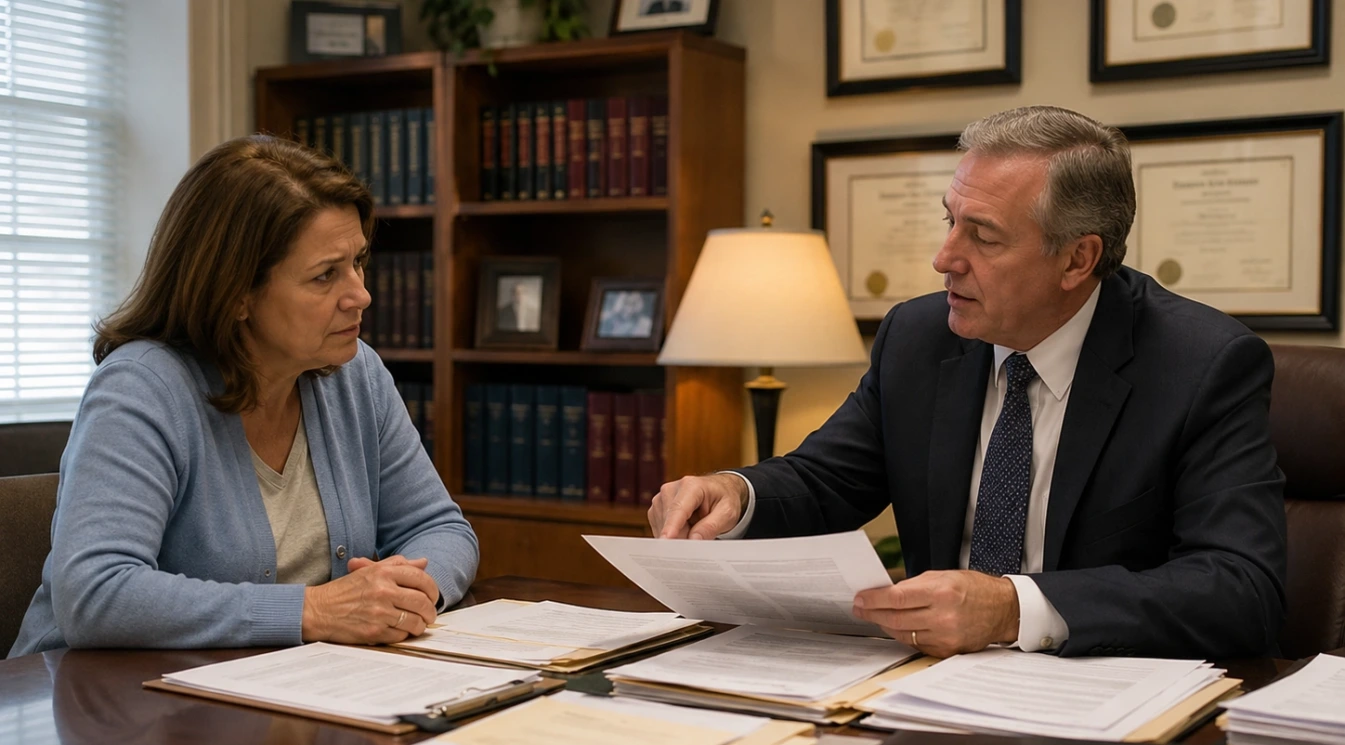
An elder abuse attorney may compare the medical chart with outside records, photographs, witness accounts, staffing information, facility policies, and electronic data. The review can help determine whether the facility recognized a risk, provided the required care, responded appropriately to a change in condition, and accurately documented what occurred.
Newman Law Group represents residents and families in cases involving nursing home abuse, neglect, preventable injuries, and lack of proper care. The firm can identify records that may be important, investigate inconsistencies, and explain which legal options may be available based on the specific facts.
Speak With a Sacramento Elder Abuse Attorney
Evidence can disappear even when no one intentionally destroys it. Video may be overwritten, staff may leave, memories may fade, and digital systems may retain only limited histories. Families do not need to know exactly which legal claim may apply before preserving accurate information.
Contact Newman Law Group to discuss a potential nursing home abuse or neglect matter, or call us at 9169320397.
This article provides general information and is not legal or medical advice. Every situation is different. Medical concerns should be evaluated by qualified health professionals, and an attorney can provide advice about a particular matter after reviewing the relevant facts.