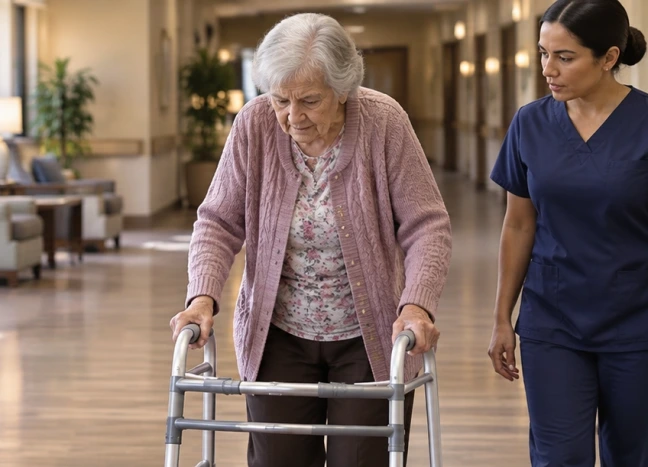


“The doctor already knows about the cough.” That may be a reassuring answer at breakfast. By supper, the resident needs to pause for breath while talking, something she could easily do that morning. Did the doctor hear about the cough alone, or did someone call back about the change in her breathing?
In a California assisted living facility, staff have a duty to observe residents and report deterioration. When a change is significant enough to alter the services a resident needs, the facility must notify the appropriate licensed medical professional immediately or as soon as reasonably possible. Staff can describe that change and seek help before a clinician has named the infection. California sets out these duties in Title 22, section 87466 and section 87463.
If a resident is struggling to breathe, is difficult to wake or appears to be in immediate danger, call 911. A message to a doctor’s office is no substitute for emergency help. California’s emergency rule and its specific exceptions are explained in our guide to when assisted living staff must call 911.
What makes a change significant?
California licenses many assisted living communities as Residential Care Facilities for the Elderly, or RCFEs. A resident’s written appraisal describes their abilities and the help they need. During an illness, that appraisal gives staff something to compare with what they see today. A resident’s own account and observations from people who know them may fill in details the appraisal cannot capture.
Consider two residents who leave their breakfast untouched. One routinely sleeps late and eats after the dining room closes. The other has always walked down for coffee, but today she says she feels too weak to stand with her usual walker. The untouched plate tells the caregiver little on its own. In the second resident’s case, the new difficulty standing changes the help she needs to get to the bathroom or back to bed. The person taking the call can now picture what the caregiver has seen.
The state’s definition turns on whether a change in physical ability, thinking, behavior or everyday functioning is substantial enough to require a change in services. The general observation rule still applies when that threshold is uncertain. It requires staff to observe residents regularly, respond to unmet needs, and document and report deterioration in physical health or mental ability to the physician and the responsible person, if there is one. California’s definition of a significant change in condition.
Who needs to hear about worsening symptoms?
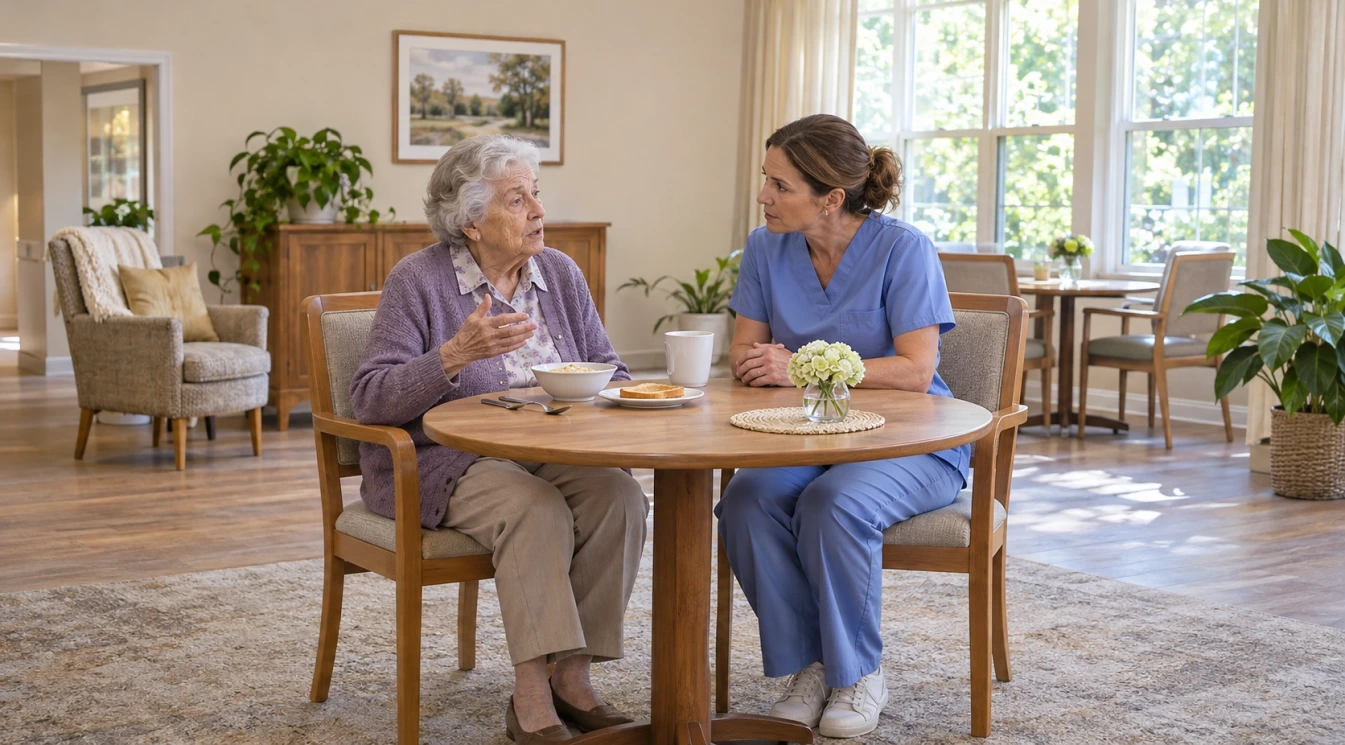
The medical professional responsible for the concern. For a significant change, section 87463 requires the facility to reach out to the appropriate licensed medical professional and, when applicable, another provider delivering specialized services. The caregiver who first hears a complaint may pass it to a supervisor who makes the call. A resident’s exact words can be more useful to the clinician than a supervisor’s summary that the resident had a difficult morning.
The resident and, when applicable, their representative. The facility must also tell the resident and, when applicable, their representative about the significant change and the clinician’s recommendations immediately or as soon as reasonably possible. A daughter may have noticed the first sign during a visit, while a spouse is the representative listed in the file. The daughter’s observation can inform the call, and the resident still has a place in the conversation about their own care. California’s rule on resident participation in care decisions.
The people providing care on the next shift. Passing along information at handover is how the next caregiver can carry out the plan. For example, “The on-call clinician called back at three. These are her instructions, and Sam is due to check on Mrs. Lee after supper” tells the evening caregiver where things stand. If the call is still pending, the person taking over needs to know that too.
What does a useful report sound like?
A resident with memory loss may have trouble answering “What’s wrong?” but answer a more familiar question quite clearly. A caregiver might tell the clinician, “She told me twice this morning that it hurt to urinate. She usually walks to the bathroom alone. Today I had to help her stand.” The clinician hears when the resident mentioned the pain and how her ability to move has changed. Those are details the caregiver is in a position to report.
Families may hear that a resident “probably has another UTI.” A new change in alertness deserves attention, and a clinician may need to consider several causes. Even a urine test showing bacteria does not, by itself, explain sudden confusion. If urinary pain was reported, that detail belongs in the conversation. If nobody heard such a complaint, the clinician should also know what prompted the suspicion. Infectious Diseases Society of America guidance on bacteria in the urine without urinary symptoms.
One cough, two shifts and a callback
Imagine that a clinician returns the facility’s morning call about a resident’s cough. The resident is talking comfortably at that point. The clinician gives instructions specific to her and asks staff to call back if her breathing changes. By midafternoon a different caregiver sees her stop twice to catch her breath on the short walk she usually manages easily. The clinician’s morning instructions tell the new caregiver why the change on that walk matters.
At handover, the two entries that matter most may be just a few lines apart. Did the morning entry identify the callback instruction? Did the afternoon entry describe what happened on the walk and who followed up? If staff reached an answering service, a message time shows when the facility tried to make contact. A return-call time shows when somebody was able to discuss the resident’s condition and give advice. Either time can be accurate while answering a different question.
Families sometimes ask how long a facility is allowed to wait for a callback. Section 87463 uses a standard of promptness tied to the circumstances. It gives no fixed number of minutes that makes waiting appropriate for every resident. If the resident worsens while a reply is pending, the new symptoms change the decision staff face. An imminent threat triggers the separate emergency rule. Title 22, section 87465(g).
What California expects the facility to document
For a significant change, section 87463(e) identifies four details that belong in the resident’s record. Together they let the resident, family and care team understand what happened after a concern was raised.
- What changed. A description such as “needed help to stand after breakfast” gives the next reader more information than “seems off today.”
- Who was contacted and when. The entry identifies the medical professional, and any applicable specialized provider, along with the date and time of the communication.
- What the professional recommended, if anything. That may include advice about when to report back. If nobody has returned the call, the entry should make that clear.
- What changed in the care provided, if anything. For a resident who now needs help standing, for example, the entry can say who will assist with transfers.
The rule separately requires a record of the communication with the resident and, when applicable, their representative. California also requires an ongoing record of illness or medical care when it affects the person’s ability to function or the services needed. A licensing rule sets out what information belongs in the record. Facilities may use different forms to capture it. Title 22, section 87506, resident records.
When an outside nurse is already involved
A visiting nurse might see a resident’s ankle on Monday and plan to return on Thursday. On Tuesday evening the resident tells a caregiver that the same shoe now hurts too much to wear. The nurse’s Monday note can explain how the ankle looked at the visit. It cannot tell the family what the facility did with the resident’s Tuesday complaint.
Section 87463 addresses this division of care. When a resident receives specialized services, the facility must consult those providers about changes and document the consultation. A family might reasonably ask what the visiting nurse heard about Tuesday’s pain and whether the nurse or physician gave new instructions before Thursday’s visit.
Timing also matters in the other direction. A nurse may have called back and spoken to one employee shortly before that employee went home. A family looking only at the visiting nurse’s note would know what the nurse recommended. Learning whether the evening caregiver received and followed that recommendation requires the facility’s side of the conversation.

The first evening back from the hospital
A discharge summary can identify the infection and list the treatment while leaving a practical question for the receiving facility. What will be different when this resident arrives back in their room? Someone who previously walked to meals alone may now need help even to reach the bathroom. The evening caregiver who knew the resident before the hospital stay needs to hear about that difference.
A family discussion before the first night back can focus on the details most likely to get lost. If the hospital says a test result is pending, which clinician expects to receive it, and how will new instructions reach the facility? If the resident needs extra assistance overnight, has the person providing that assistance heard about it? A significant change can also require a written reappraisal, corresponding changes in care, and a discussion with the resident, their representative when applicable, and appropriate staff. The answers help a family understand what the plan means after the daytime team goes home.
When the family still has questions about a delay
A later diagnosis can explain why a resident became so ill. It may say little about what a caregiver could see a day earlier. A review of a possible delay starts with the information available at each decision. What did the resident say? Which details reached the clinician? Did the clinician’s instructions still fit the resident’s condition when the evening shift came on? Sometimes the answers show that staff acted promptly and the illness progressed anyway. In other cases, the difficulty lies in an important change that never reached the person who could act on it.
In reviewing possible assisted living neglect, an attorney may consider the care the facility undertook, whether its response was reasonable under the circumstances, and whether a failure was a substantial factor in causing harm. Assessing what earlier medical attention might have changed can also require a clinician’s opinion. California civil jury instruction on elder neglect. For a broader discussion of infection complications, the firm also has a guide to unaddressed infections in elder care.
Newman Law Group, LLP reviews assisted living neglect concerns in Sacramento and Northern California. Families with questions about a serious injury after delayed medical attention can contact the firm or call 9169320397.
This article provides general information. It does not give legal or medical advice for an individual resident.