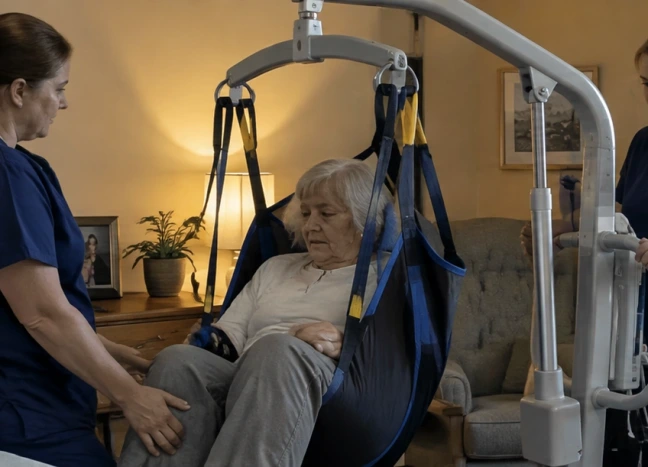

Families sometimes hesitate to complain about nursing home care because the resident still depends on the same facility for meals, medication, hygiene, transfers, and supervision. A son or daughter may worry that repeated questions will make staff less attentive. A resident may fear being labeled “difficult,” moved to another room, isolated, or pressured to leave.
Those concerns should not prevent a resident from speaking up about unsafe or inadequate care. Residents of Medicare- and Medicaid-certified nursing facilities have the right to voice grievances without discrimination or reprisal. California law also prohibits long-term health care facilities from retaliating against residents, complainants, or employees because someone presented a grievance, filed a complaint, or cooperated with a government investigation.
At the same time, not every disagreement, care-plan change, or unpleasant interaction is retaliation. The facts usually turn on timing, the reason given for the facility’s action, whether similar residents were treated differently, and whether the action can be supported by legitimate clinical or operational needs.
What Nursing Home Retaliation Can Look Like
Retaliation is adverse or discriminatory treatment connected to a complaint, grievance, investigation, or exercise of a protected resident right. It may be obvious, such as threatening to evict a resident after the family reports neglect. More often, families describe subtler changes that begin after they raise a concern.
Possible warning signs include:
- Sudden pressure to transfer or discharge the resident
- Threats that the facility can no longer meet the resident’s needs without a clear clinical explanation
- Unexplained delays in answering call lights, providing hygiene, or assisting with meals and toileting
- Abrupt hostility, ridicule, intimidation, or dismissive treatment by staff
- Excluding the resident or authorized representative from care-planning discussions
- Unexplained room, roommate, schedule, or caregiver changes that appear punitive
- Interference with reasonable visitation, telephone calls, mail, or private communication
- New restrictions or disciplinary measures that are not tied to documented safety or clinical needs
- Unexplained medication or treatment changes shortly after a complaint
- Repeated suggestions that the family should stop asking questions or find another facility
Any one of these events may have a legitimate explanation. A room change may be necessary for infection control, a caregiver assignment may change because of scheduling, and a medication may be adjusted for a valid medical reason. The concern becomes stronger when the explanation is inconsistent, unsupported by the chart, different from how similar situations are handled, or closely follows a complaint.
Federal Law Protects the Right to Complain
Federal resident-rights regulations require a nursing facility to allow residents to exercise their rights without interference, coercion, discrimination, or reprisal. Residents may voice grievances to the facility or to an outside agency concerning care that was provided, care that was not provided, staff conduct, other residents, or other aspects of the nursing home stay.
The facility must make prompt efforts to resolve grievances and maintain a grievance policy. That policy must explain how a resident may complain orally, in writing, or anonymously; identify the facility’s grievance official; provide an expected review timeframe; and explain the right to obtain a written decision. It must also provide contact information for outside entities such as the state survey agency and Long-Term Care Ombudsman Program.
A family member or resident representative may help raise a concern, but the resident’s own preferences and authority still matter. When possible, families should involve the resident in deciding what will be reported and how the issue should be addressed.
California’s Anti-Retaliation Protection
California Health and Safety Code section 1432 prohibits a licensed long-term health care facility from discriminating or retaliating against a complainant, patient, or employee because a grievance or complaint was presented or because someone initiated or cooperated in a government investigation or proceeding involving care, services, or conditions at the facility.
The statute contains an important timing rule. An attempt to expel a resident, or other discriminatory treatment of a resident, within 180 days after a complaint is submitted to a government entity, received by the facility administrator, or followed by a related proceeding may create a rebuttable presumption of retaliation. A rebuttable presumption does not automatically prove the case. It means the timing can shift the evidentiary burden so the facility must produce evidence supporting a legitimate reason for its action.
California law also requires long-term health care facilities to post notice of the right to request an inspection, the procedure for doing so, the right to remain anonymous, and the prohibition against retaliation.
What Is Not Necessarily Retaliation?
A facility may make decisions that a resident or family dislikes without acting unlawfully. Nursing homes remain responsible for protecting residents, following physician orders, complying with infection-control requirements, and responding to changes in condition. Legitimate actions may include:
- Clinically necessary care changes
- Revising a treatment plan after a medical assessment
- Changing supervision because the resident’s condition has changed
- Temporarily restricting an activity that presents a documented safety risk
- Reasonable operational changes
- Changing staff assignments because of scheduling or availability
- Moving a resident for maintenance, infection control, or a documented care need
- Applying neutral rules that are enforced consistently for all residents
- Lawful transfer or discharge procedures
- Starting a transfer process for one of the limited reasons permitted by law
- Providing proper written notice, appeal information, and discharge planning
- Documenting why the facility claims the resident’s needs cannot be met
The distinction usually depends on documentation, consistency, and motive. A facility should be able to explain why an action was taken and show that the decision was based on resident care, safety, or another lawful reason rather than punishment for speaking up.
Retaliatory Discharge Threats Deserve Immediate Attention
Pressure to remove a resident is one of the most serious forms of possible retaliation. A facility may tell the family that the resident is “too difficult,” needs more care, has exhausted Medicare coverage, or would be better served elsewhere. Some of those statements may raise legitimate discharge questions, but a nursing home cannot simply force a resident out because the resident or family complained.
Federal rules permit involuntary transfer or discharge only for limited reasons and require notice, documentation, appeal information, and appropriate discharge planning. A sudden discharge notice after a complaint should be reviewed carefully, especially when the resident’s condition has not materially changed.
Our article about wrongful nursing home discharge explains the permitted reasons and the steps families can take after receiving a notice.
Document the Resident’s Baseline and What Changed
Retaliation can be difficult to evaluate without a clear before-and-after record. Begin with the resident’s ordinary routine before the complaint. Note typical response times, staff relationships, room assignment, visitation, activities, medications, transfer assistance, and participation in care planning. Then record changes that occur afterward.

Useful documentation may include:
- The date, subject, and recipients of each complaint or grievance
- Copies of emails, letters, portal messages, and written responses
- Names and roles of staff members involved
- Dates and descriptions of new restrictions, threats, delays, or hostile statements
- Care-plan revisions, medication orders, room-change notices, and discharge papers
- Photographs or observations showing missed care or a decline in condition
- Names of residents, visitors, or employees who witnessed relevant events
- Complaint confirmation numbers and communications with regulators or the ombudsman
Keep descriptions factual. Record exact statements when possible rather than characterizing everyone’s motives. A note that says, “Administrator stated on July 10 that the family should consider another facility because we had filed too many complaints,” is more useful than simply writing, “They are retaliating.”
Additional suggestions for preserving records and digital information appear in our article on evidence after suspected nursing home abuse or neglect.
Raise the Concern in a Way That Creates a Clear Record
Families do not need to be confrontational to be firm. A concise written complaint often creates a clearer record than repeated informal conversations. Identify the resident, describe the event, state when it occurred, explain the requested response, and ask for written confirmation.
For example, a family might write that call lights were repeatedly unanswered after a staffing complaint, identify the dates and approximate wait times, request an explanation, and ask what steps will be taken to ensure the resident receives required toileting assistance. This approach focuses on the resident’s needs rather than accusing individual employees before the facts are known.
Request a copy of the facility’s grievance policy and ask for the name of the grievance official. If the complaint involves an immediate risk, clearly state that urgent protective action is needed rather than waiting for the ordinary grievance process.
When to Contact the Long-Term Care Ombudsman
The Long-Term Care Ombudsman Program helps residents of nursing homes and other long-term care settings resolve concerns involving health, safety, welfare, and resident rights. An ombudsman may communicate with the resident, review the concern with appropriate consent, and work with the facility toward a resolution.
An ombudsman is not the facility’s employee and does not represent the nursing home. The program’s role is also different from a state enforcement investigation or civil lawsuit. It generally works to resolve the complaint according to the resident’s wishes rather than deciding damages or imposing criminal penalties.

Reporting to the California Department of Public Health
The California Department of Public Health receives complaints involving licensed health care facilities, including skilled nursing facilities. A complaint may address neglect, abuse, resident-rights violations, unsafe conditions, improper discharge practices, or retaliation. Complaints may be submitted anonymously, although contact information can help an investigator request clarification or additional evidence.
Keep a copy of what was submitted and any confirmation or reference number. A regulatory complaint is separate from the facility grievance process, and neither process replaces urgent medical care or emergency reporting when a resident faces immediate danger.
Do Not Let Fear of Retaliation Delay Necessary Care
When a resident has an untreated injury, serious infection, breathing difficulty, sudden confusion, uncontrolled pain, or another urgent problem, obtaining medical assistance takes priority over documenting retaliation. Families should request prompt assessment and call emergency services when the circumstances require it.
If the concern involves suspected abuse, neglect, or exploitation, reporting obligations and protective options may extend beyond the facility grievance process. Depending on the facts, appropriate contacts can include CDPH, the ombudsman, Adult Protective Services, law enforcement, or a health care professional.
When Retaliation May Support a Legal Claim
Not every tense interaction or unfavorable decision supports a legal claim. An attorney may examine whether the resident or family engaged in protected activity, whether the facility knew about it, what adverse treatment followed, how closely the events occurred, and whether the facility has a credible, documented explanation.
Retaliation may overlap with other legal issues. A punitive reduction in care can contribute to neglect. A retaliatory eviction may also be a wrongful discharge. Interference with visits, communication, treatment decisions, or care-plan participation may implicate separate resident rights.
Newman Law Group represents residents and families in matters involving nursing home abuse, neglect, resident-rights violations, wrongful discharge, and serious injuries following complaints about care. The firm can review the chronology, records, facility explanations, and resulting harm to determine what legal options may be available.
Contact Newman Law Group to discuss suspected nursing home retaliation or related neglect, or call 9169320397.
This article provides general legal information and is not advice for a particular matter. The application of federal and California protections depends on the facility type, the complaint, the action taken, and the surrounding facts.