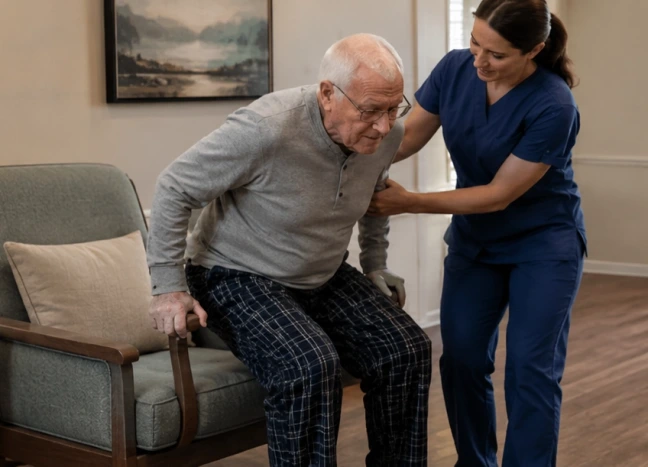


A nursing home resident’s condition can worsen gradually or change within minutes. A new fever, unusual confusion, reduced appetite, breathing difficulty, weakness, or unexplained pain may be the first indication of a serious problem. Staff do not need to diagnose every condition immediately, but they are expected to recognize meaningful changes, assess the resident, communicate with the appropriate medical professional, follow resulting orders, and continue monitoring.
Delays can matter. An infection may progress, dehydration may worsen, a medication reaction may continue, or symptoms of a stroke or head injury may go untreated. Families may also lose valuable time when the facility does not notify the resident’s representative or provides only a vague description of what occurred.
Not every change requires hospitalization, and an unfavorable outcome does not by itself establish neglect. The central questions are whether the facility recognized the change, responded in a clinically appropriate manner, communicated as required, and obtained additional care when the resident needed it.
What Counts as a Change in Condition?
A change in condition is not limited to a medical emergency. It can involve a deterioration in the resident’s physical, mental, or psychosocial status, a new injury, or a development that requires a meaningful change in treatment. The importance of a symptom depends on the resident’s diagnoses, baseline abilities, medications, recent events, and care plan.
Examples that may require prompt assessment include:
- New confusion, lethargy, agitation, or difficulty waking
- Fever, chills, low body temperature, or other signs of infection
- Shortness of breath, low oxygen readings, chest discomfort, or a rapid change in breathing
- Sudden weakness, facial drooping, speech changes, or loss of coordination
- A fall, head impact, unexplained bruising, swelling, or significant pain
- Repeated vomiting, diarrhea, reduced urine output, or signs of dehydration
- A rapid decline in eating, drinking, mobility, or participation in normal activities
- New or worsening skin breakdown, drainage, redness, odor, or wound pain
- Excessive sedation, tremors, abnormal movements, or other possible medication effects
- Marked anxiety, withdrawal, fearfulness, or another significant behavioral change
A symptom may appear minor when viewed alone. Its meaning can change when it is compared with the resident’s normal condition or combined with other observations. Staff members who provide daily care are often in the best position to notice those differences.
Federal Rules Require Notification in Specific Situations
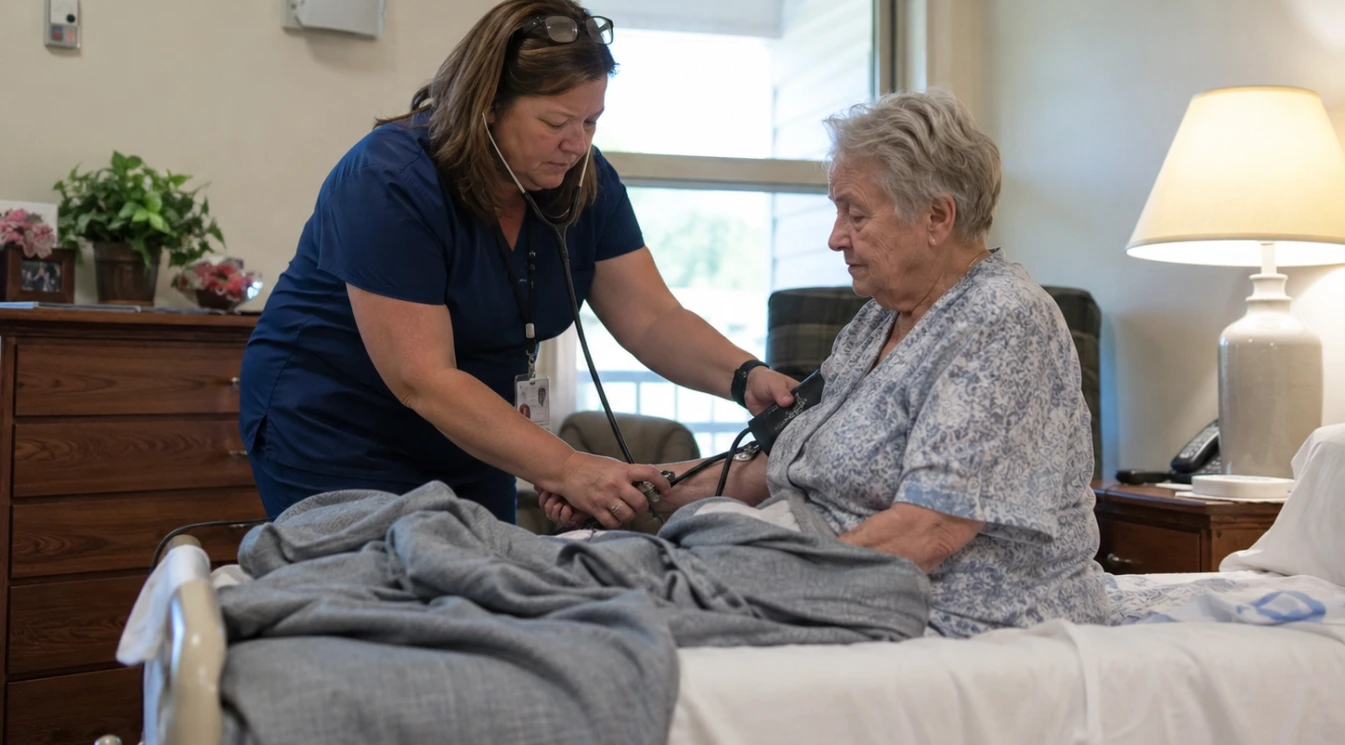
Federal regulations governing Medicare- and Medicaid-certified nursing facilities require the facility to immediately inform the resident, consult with the resident’s physician, and notify the resident representative, consistent with that representative’s authority, when certain events occur. Those events include:
- An accident that causes injury and may require physician intervention
- A significant deterioration in the resident’s physical, mental, or psychosocial status
- A need to alter treatment significantly because of adverse consequences or the need for a new form of treatment
- A decision to transfer or discharge the resident
The regulation does not mean that every minor fluctuation requires an emergency call. It does mean that a facility cannot treat a significant decline as a routine inconvenience or wait until the next scheduled family visit to mention it. The physician consultation and representative notification serve different purposes: the clinician evaluates medical needs, while the resident or authorized representative receives information necessary to participate in care decisions.
Notification Is Only One Part of the Response
A facility does not necessarily satisfy its responsibilities by making a telephone call. Staff must still provide appropriate care based on the resident’s assessment, care plan, physician orders, and professional standards. Depending on the circumstances, an appropriate response may involve:
- Immediate assessment
- Observe the resident and compare the findings with the person’s baseline.
- Obtain relevant vital signs, pain information, neurological observations, blood glucose, oxygen measurements, or other data within staff members’ scope of practice.
- Identify recent falls, medication changes, reduced intake, wounds, infections, or other possible causes.
- Clinical communication
- Give the physician or qualified practitioner complete and accurate information.
- Report the onset, progression, assessment findings, current medications, and measures already taken.
- Clarify new orders and communicate them to the employees responsible for carrying them out.
- Treatment and follow-up
- Implement new orders without unreasonable delay.
- Monitor whether the resident improves, remains unchanged, or continues to decline.
- Recontact the practitioner or arrange transfer when the initial response is ineffective or the condition becomes more urgent.
A call documented in the chart may therefore be only one piece of the timeline. The records should also show what information was communicated, what instructions were received, whether those instructions were followed, and how the resident responded.
When Delayed Medical Care Can Cause Serious Harm
Older nursing home residents often have limited physiological reserves and several chronic conditions. A delay that might be manageable for a younger, healthier person may become dangerous for a frail resident.
Infections and Sepsis
New confusion, weakness, fever, low temperature, rapid breathing, or reduced intake can be associated with infection. A facility that fails to report worsening symptoms, obtain ordered testing, administer prescribed treatment, or arrange needed transfer may allow an infection to progress. Additional information about this risk is available on our page concerning unaddressed infections and sepsis.
Stroke, Cardiac, and Respiratory Symptoms
Sudden neurological changes, chest symptoms, or breathing difficulty may require urgent evaluation. Staff should not dismiss a major change as ordinary aging, dementia, anxiety, or fatigue without appropriate assessment. The relevant issue is not whether staff correctly diagnosed the final condition, but whether they responded reasonably to the symptoms they observed or should have observed.
Falls and Head Injuries
A resident may initially appear stable after a fall and deteriorate later. Increasing confusion, vomiting, severe headache, new weakness, unequal pupils, or unusual sleepiness may warrant prompt medical attention. The response should account for the resident’s medications, including anticoagulants, and any physician instructions for post-fall monitoring. Our article about nursing home falls and preventable neglect discusses these issues in greater detail.
Dehydration, Malnutrition, and Swallowing Problems
Reduced intake may reflect illness, pain, depression, medication effects, swallowing difficulty, or an inability to feed independently. Repeatedly recording low intake without investigating the cause or notifying the appropriate clinician can allow a correctable problem to become more serious.
Wound Deterioration
New drainage, odor, tissue changes, fever, increased pain, or rapid wound enlargement may require a change in treatment. A wound record that repeats the same intervention despite continued decline may raise questions about whether the facility recognized that the plan was ineffective.
Families May Notice the Change Before the Facility Explains It
Family members often know how the resident normally speaks, moves, eats, and interacts. They may notice that a loved one is unusually sleepy, cannot hold a conversation, appears dehydrated, has stopped walking, or seems frightened or confused. Those observations deserve a clear response.
Useful questions include:
- When was the change first documented?
- What assessment was performed, and by whom?
- Which physician or practitioner was contacted, and at what time?
- What information was provided to that practitioner?
- Were new orders given, and when were they implemented?
- What follow-up monitoring was required?
- Why was the resident kept at the facility or transferred to a hospital?
- When was the resident or representative notified?
Families should remain factual and avoid trying to diagnose the resident themselves. When symptoms appear urgent, requesting immediate medical evaluation is more important than debating the facility’s explanation.
Common Explanations That Still Require Closer Review
A facility may explain that the resident “was fine earlier,” that a doctor did not call back, or that the symptoms were expected because of dementia or age. Those statements may be accurate, incomplete, or unsupported. The surrounding records help show what actually occurred.
- “The physician was notified.” The chart should identify when contact occurred, what was reported, and what instructions followed.
- “The family did not answer.” The facility’s efforts, alternate contacts, urgency of the situation, and continued medical response still matter.
- “The resident refused treatment.” Records should address the resident’s capacity, what information was provided, whether a representative was involved, and what alternatives were considered.
- “This was normal for the resident.” Assessments and prior notes should support the claimed baseline rather than contradict it.
- “The symptoms came on suddenly.” Earlier nursing notes, intake records, vital signs, medication records, and family communications may confirm or challenge that account.
A Significant Change May Require Reassessment and Care-Plan Revision
Federal nursing facility regulations require a comprehensive assessment within 14 calendar days after the facility determines, or should have determined, that a significant change occurred. For this purpose, a significant change generally means a major decline or improvement that is not expected to resolve without further intervention, affects more than one area of health status, and requires interdisciplinary review or revision of the care plan.
That formal assessment requirement is distinct from the immediate response to an urgent symptom. A facility should not wait up to 14 days before contacting a physician or addressing an acute decline. The longer timeframe concerns completion of the comprehensive significant-change assessment after the need for one has been identified.
Records That Can Clarify What Happened
A delayed-care review often depends on reconstructing the sequence of events. Relevant records may include:
- Nursing notes and certified nursing assistant documentation
- Vital-sign, neurological, behavior, intake, output, and weight records
- Medication and treatment administration records
- Physician orders, progress notes, and on-call communication records
- Laboratory, imaging, pharmacy, and hospital-transfer records
- Care plans and significant-change assessments
- Call-light, electronic chart, and audit-trail information
- Telephone, portal, email, and written communications with family
- Staff assignments and schedules relevant to the period of decline
Electronic audit trails can be especially useful because they may show when an entry was created or modified. A note stating that a physician was contacted at a particular time should be compared with orders, telephone records, medication administration, and later documentation.
When a Delay May Support a Nursing Home Neglect Claim
Not every delayed call, charting mistake, or medical decline supports a legal claim. An attorney generally considers several connected questions:
- What symptoms or changes did staff observe, or what should reasonably have been recognized?
- What did the resident’s care plan, physician orders, and clinical condition require?
- Was the physician consulted and the authorized representative notified as required?
- Were new orders carried out and was the resident reassessed?
- Would an earlier, appropriate response probably have changed the outcome?
- What injury, deterioration, hospitalization, or additional treatment resulted?
The analysis is highly fact-specific. A communication failure may be troubling but legally different from a delay that causes preventable harm. Medical records, expert review, staffing information, and witness accounts may be needed to distinguish a poor outcome from actionable lack of proper care.
What Families Can Do After a Concerning Delay
Address immediate medical and safety needs first. Ask for the resident to be assessed, request the name of the practitioner contacted, and obtain a clear explanation of the current plan. Write down dates, times, names, symptoms, and statements while the information is fresh. Preserve messages and request relevant records.
Families may also report concerns to the facility administrator, the Long-Term Care Ombudsman, the California Department of Public Health, law enforcement, or another appropriate agency depending on the urgency and type of suspected harm. Reporting and a civil legal review are separate processes.
Newman Law Group represents residents and families in matters involving delayed medical care, unreported changes in condition, nursing home neglect, and serious preventable injuries. Contact Newman Law Group to discuss the circumstances, or call 9169320397.
This article provides general legal and medical information and is not advice for a particular situation. A qualified health professional should evaluate urgent medical concerns, and an attorney can provide legal advice after reviewing the specific facts.